
Beautiful Cedar Waxwing On Trumpet vine .
Monthly Archives: July 2019
[IBLE] First-ever Yard Bird
I was just looking out my window a few minutes ago and noticed an odd-looking bird fly into my rock garden bushes, and when I got the binos on it, there was a Gray Catbird! He flew off shortly thereafter, but that was a first-ever yard bird for me, making #74 over the 19 years I’ve lived here. You just never know what might turn up…I’ve always known they are down along Porter Creek, but one finally made its way up to me… fyi… Jonathan, Horseshoe Bend
Sent from Mail
RE: [IBLE] Top Shorebirding spots near Boise?
Scott:
The first dredge pond west of Glenwood, on the Garden City bike path, had some shore birds the other day. Larry Arnold told me he’d seen a Great Egret and Black-necked Stilts, and I wasn’t disappointed. They’ve drained the pond so it’s back to the way it was a few years ago, with islands and mud flats. Who knows who will show up? The “No Trespassing” signs are still there, but you can see a lot from along the path, and I can’t imagine they’d get upset if you tiptoed to the rim. 😉
Tom
From: ible@yahoogroups.com [mailto:ible@yahoogroups.com] On Behalf Of satuthill@cableone.net [ible]
Sent: Tuesday, July 02, 2019 1:17 PM
To: ible@yahoogroups.com
Subject: [IBLE] Top Shorebirding spots near Boise?
It has been many years since I did much birding. With southbound shorebird migration starting soon — what are the top shorebird spots around Boise? I visited one of my old favorite spots yesterday, Hubbard Reservoir. It has changed quite a bit since I was last there — which could have been 20+ years ago. Though the whole recreation area is greatly improved overall it does not look like it will be optimum for shorebirds anymore. Or, at least as good as it used to be. So, my question. What are the top spots for shorebirds now in the Boise, southwest Idaho area?
Scott
[IBLE] Top Shorebirding spots near Boise?
It has been many years since I did much birding. With southbound shorebird migration starting soon — what are the top shorebird spots around Boise? I visited one of my old favorite spots yesterday, Hubbard Reservoir. It has changed quite a bit since I was last there — which could have been 20+ years ago. Though the whole recreation area is greatly improved overall it does not look like it will be optimum for shorebirds anymore. Or, at least as good as it used to be. So, my question. What are the top spots for shorebirds now in the Boise, southwest Idaho area?
Scott
[IBLE] Re: Owl Research Institute – Making Sense of Highs and Lows
also reminds me of Steve’s and Darren’s high count of 25 SEOW, Feb 2015, at Camas NWR
seems like yesterday when Steve posted that, eyiyi
From: “Larry Arnold”
To: “IBLE”
Sent: Monday, July 1, 2019 12:38:22 PM
Subject: Fwd: Owl Research Institute – Making Sense of Highs and Lows
this might be of interest to some of us on the list….
and, coincidentally, over the last few years Missy and I have encountered Short-eared Owl in a few new places in S Idaho (new for us) =)
LA
To: “Larry Arnold”
Sent: Sunday, June 30, 2019 5:51:27 PM
Subject: Owl Research Institute – Making Sense of Highs and Lows
Thought you might have interest in this newsletter from ORI. There is a Snowy Owl nest cam about half way down. Enjoy!
[ http://links.ascendbywix.com/f/a/_KoANFbKbEwBm02izqucDw~~/AABFVwA~/RgRe7k7LP4QAAWh0dHBzOi8vd3d3Lm93bHJlc2VhcmNoaW5zdGl0dXRlLm9yZy9zby9mY01qbnlLRHAvY2xpY2s_dz1MUzB0RFFwak5UVmxZVEJqWkMwMU1tSmlMVFEzT1RjdFlqVmhPUzFqT0RNNFlUY3lObVF6TmpJTkNtaDBkSEE2THk5M2QzY3ViM2RzY21WelpXRnlZMmhwYm5OMGFYUjFkR1V1YjNKbkx6OTFkRzFmWTJGdGNHRnBaMjQ5WkRGbU9UZGtZV1l0TnpWall5MDBOMlJsTFRsak5HUXRaVGRtTWpOalptVXhNMlpqSm5WMGJWOXpiM1Z5WTJVOWMyOE5DaTB0TFFXA3NwY0IKACHLyQtdTlLAglIYbGluZGFwaGVsYW5sbXRAZ21haWwuY29tWAQAAC92 ]
THE HIGHS AND LOWS OF OPEN COUNTRY SPECIES
2019 has produced unusual highs and lows at our study sites in western Montana – unprecedented survey numbers for one species, while another species experienced one of its lowest breeding years ever. How does it all fit in?
When we hear of highs and lows reported among populations, it can be easy to assume that these markers are indicative of a species’ overall health. Sometimes, of course, they are; but it’s important to remember that annual variations in numbers are a natural occurrence for some animals – a fact that is especially true for open country species of owls, which often show dramatic annual variation in breeding numbers within a given area. Until data from any one season can be contextualized among many years, we don’t know if the findings are part of a larger trend, or an anomaly.
In North America, open country species are Snowy Owls, Long-eared Owls, Short-eared Owls, Burrowing Owls, and Barn Owls. They rely on a variety of expansive habitats to hunt small mammals, ranging from the Arctic tundra, to prairie, to shrub-steppe. The dramatic highs and lows of Snowy Owl populations, in response to lemming variations, are perhaps, the most well-known – yet this boom and bust phenomenon is not unique to Snowy Owls. 2019 has seen extremes in two closely related species at our study sites in western Montana: Long-eared Owls and Short-eared Owls.
For Long-eared Owls, it has been an unusually poor breeding season, producing just two nests. One nest failed during incubation (cause unknown); only one chick (from five eggs) dispersed from the second nest and did not survive to fledging. Researcher Matt Larson recently found its remains during a monitoring visit and the cause of death could not be determined. For perspective, these same study sites have seen as many as 24 nests in a season and only one other time in 32 years have no chicks survived to fledging.
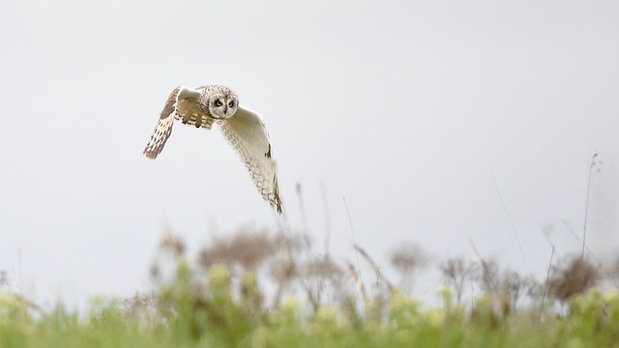
While it appears to be a bust year for Long-eared Owls, Short-eared Owls seem to be booming. We are wrapping up our second year of participation in Project WAfLS (Western Asio flammeus Landscape Study) – a citizen-science based monitoring program for Short-eared Owls which is coordinated across 8 western states. Although this year’s analysis has only just begun, Short-eared Owls were detected across much of the state and in seemingly larger numbers than last year. Indeed, at a route we’ve formally surveyed since 2008, we detected 50 Short-eared Owls – more than double our previous high.
Comparing nest success of one species to survey results of another is a bit like comparing apples and oranges, however, the point is simply this: it takes many years – through several natural peaks and valleys – to begin to accurately detect population trends. It’s easy and natural to want to draw conclusions from a couple years of data, but the truth is, these data are a perfect example of the need for long-term research and monitoring. It’s what the Owl Research Institute was founded on, and we remain as committed to this approach today as we did over 30 years ago.
Photo at top © Kurt Lindsay, Short-eared Owl, western Montana, 2019.
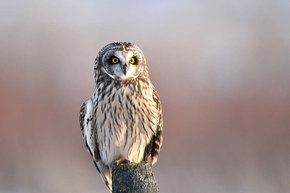
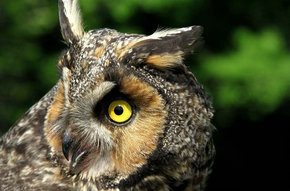
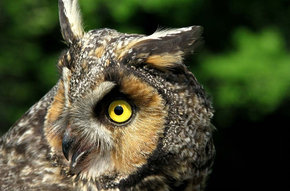
Photos below left, Short-eared Owl © Kurt Lindsay, right, Long-eared Owl © CK Nealson.
IN OTHER NEWS
SNOWY OWL UPDATE
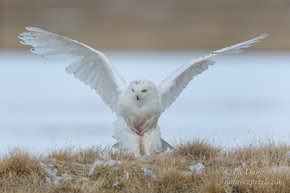
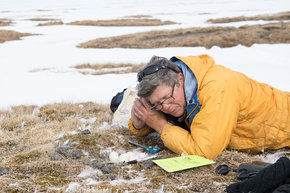
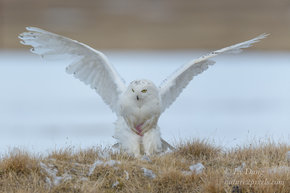
It’s nearly week three on the Snowy Owl Project. While there is more ground to cover in search of nests, only three have been found so far. We’re always hopeful it will be a strong breeding season, although early indicators do not suggest this will be the case at our study site in Utqiagvik, Alaska for 2019.
Fortunately, we’ve been able to live stream from one of these nests, giving viewers from around the world the rare opportunity to watch a Snowy Owl pair incubate and raise young on the Arctic tundra. No hatches yet, but the live cam can be seen here:
[ http://links.ascendbywix.com/f/a/PecBpF5ktQyLcRhMkpOpOg~~/AABFVwA~/RgRe7k7LP0TlaHR0cHM6Ly93d3cub3dscmVzZWFyY2hpbnN0aXR1dGUub3JnL3NvL2ZjTWpueUtEcC9jbGljaz93PUxTMHREUW93WXpKak5UTXhPQzB4TXpKbExUUTVOVGN0TUdWbVlTMHpZekUwTVRBME1qY3pZemdOQ21oMGRIQnpPaTh2Wlhod2JHOXlaUzV2Y21jdmJHbDJaV05oYlhNdmIzZHNMWEpsYzJWaGNtTm9MV2x1YzNScGRIVjBaUzloY21OMGFXTXRjMjV2ZDNrdGIzZHNMVzVsYzNScGJtY3RZMkZ0RFFvdExTMFcDc3BjQgoAIcvJC11OUsCCUhhsaW5kYXBoZWxhbmxtdEBnbWFpbC5jb21YBAAAL3Y~ | EXPLORE SNOWY OWL CAM ]
BOREAL OWL STUDY
Of all the species we study, Boreal Owls may the most difficult of all to locate. Through the use of nest boxes, however, we’ve had the opportunity to monitor 43 nests over the past 23 years. This has afforded the opportunity to document egg laying, incubation, growth rates, plumage development, diet, and mating systems. While these findings are interesting, the data might not reflect natural distribution or other aspects of the biology, due to the artificial establishment of nest boxes (as opposed to our natural cavity nest research on Northern Pygmy and Northern Saw-whet Owls, for example). Nonetheless, our records of site fidelity and natal dispersal, though rare, are important to understanding the life history of Boreal Owls.
We’ve been out snowmobiling and hiking in search of Boreal Owls but, so far, haven’t found any nests within our study area this year. Boreals nest at high elevations in Montana and this year’s abundant spring snow may have impacted the availability of prey they need to breed. We’ll keep trying and let you know if we find a late nest somewhere in the mountains yet this season!
Photo © Steve Hendricks
ETHICS AND INTERVENTION
As researchers, much of our work centers around the life and death of the animals we study. It can be hard to watch a nest of chicks struggle to survive. As a result, it’s important to have policies in place that clearly define how we respond. In most situations, our approach is to let nature take its course. A recent incident on our Osprey cam, however, fell within a gray area. Read about the incident and our decision making process below.
Photo: © [ http://explore.org/ | explore.org ]
[ http://links.ascendbywix.com/f/a/S0yo8l1aYfBRUDgHUeKLBw~~/AABFVwA~/RgRe7k7LP4RIAWh0dHBzOi8vd3d3Lm93bHJlc2VhcmNoaW5zdGl0dXRlLm9yZy9zby9mY01qbnlLRHAvY2xpY2s_dz1MUzB0RFFvMk9HSmpNemczWmkwd01XRmxMVFJrTXpZdE1XWXdaUzA0TlRVMll6a3hNV0l6TW1RTkNtaDBkSEJ6T2k4dmQzZDNMbTkzYkhKbGMyVmhjbU5vYVc1emRHbDBkWFJsTG05eVp5OXphVzVuYkdVdGNHOXpkQzh5TURFNUx6QTJMekUxTDA5U1NYTXRZV04wYVc5dUxXRjBMWFJvWlMxUGMzQnlaWGt0Ym1WemREOTFkRzFmWTJGdGNHRnBaMjQ5WkRGbU9UZGtZV1l0TnpWall5MDBOMlJsTFRsak5HUXRaVGRtTWpOalptVXhNMlpqSm5WMGJWOXpiM1Z5WTJVOWMyOE5DaTB0TFFXA3NwY0IKACHLyQtdTlLAglIYbGluZGFwaGVsYW5sbXRAZ21haWwuY29tWAQAAC92 | ORI ACTION AT OSPREY NEST ]
THANK YOU FOR YOUR SUPPORT!
[ http://links.ascendbywix.com/f/a/5lpHMKk_3okEP9WEz0IJGQ~~/AABFVwA~/RgRe7k7LP4QMAWh0dHBzOi8vd3d3Lm93bHJlc2VhcmNoaW5zdGl0dXRlLm9yZy9zby9mY01qbnlLRHAvY2xpY2s_dz1MUzB0RFFvNE16WTBPREJtWVMxbFpHUXpMVFJsTURRdFpXVm1PQzAxTURjMVlXUmtZbVZqTW1JTkNtaDBkSEJ6T2k4dmQzZDNMbTkzYkhKbGMyVmhjbU5vYVc1emRHbDBkWFJsTG05eVp5OWtiMjVoZEdVdE1UOTFkRzFmWTJGdGNHRnBaMjQ5WkRGbU9UZGtZV1l0TnpWall5MDBOMlJsTFRsak5HUXRaVGRtTWpOalptVXhNMlpqSm5WMGJWOXpiM1Z5WTJVOWMyOE5DaTB0TFFXA3NwY0IKACHLyQtdTlLAglIYbGluZGFwaGVsYW5sbXRAZ21haWwuY29tWAQAAC92 | DONATE TO ORI ]
[ http://links.ascendbywix.com/f/a/w3pDbrE0eMsZN7ubq-ASYA~~/AABFVwA~/RgRe7k7LP0RNaHR0cHM6Ly9tYXBzLmdvb2dsZS5jb20vP3E9T1dMIFJFU0VBUkNIIElOU1RJVFVURSBQTyBCT1ggMzksIENIQVJMTywgTVQgNTk4MjRXA3NwY0IKACHLyQtdTlLAglIYbGluZGFwaGVsYW5sbXRAZ21haWwuY29tWAQAAC92 | OWL RESEARCH INSTITUTE PO BOX 39, CHARLO, MT 59824 ]
[ http://links.ascendbywix.com/f/a/w9ur_XlCm419OkrZENCL1g~~/AABFVwA~/RgRe7k7LP4QBAWh0dHBzOi8vd3d3Lm93bHJlc2VhcmNoaW5zdGl0dXRlLm9yZy9zby9mY01qbnlLRHAvY2xpY2s_dz1MUzB0RFFwaVpEZzNZakV4WVMwM1ptUmtMVFF6TW1FdE1tSXhPUzB5TVdFNU5UQTRPREkyWkRnTkNtaDBkSEJ6T2k4dmQzZDNMbTkzYkhKbGMyVmhjbU5vYVc1emRHbDBkWFJsTG05eVp5OF9kWFJ0WDJOaGJYQmhhV2R1UFdReFpqazNaR0ZtTFRjMVkyTXRORGRrWlMwNVl6UmtMV1UzWmpJelkyWmxNVE5tWXlaMWRHMWZjMjkxY21ObFBYTnZEUW90TFMwVwNzcGNCCgAhy8kLXU5SwIJSGGxpbmRhcGhlbGFubG10QGdtYWlsLmNvbVgEAAAvdg~~ | Owl Research Institute ]



[IBLE] Fwd: Owl Research Institute – Making Sense of Highs and Lows
this might be of interest to some of us on the list….
and, coincidentally, over the last few years Missy and I have encountered Short-eared Owl in a few new places in S Idaho (new for us) =)
LA
To: “Larry Arnold”
Sent: Sunday, June 30, 2019 5:51:27 PM
Subject: Owl Research Institute – Making Sense of Highs and Lows
Thought you might have interest in this newsletter from ORI. There is a Snowy Owl nest cam about half way down. Enjoy!
[ http://links.ascendbywix.com/f/a/_KoANFbKbEwBm02izqucDw~~/AABFVwA~/RgRe7k7LP4QAAWh0dHBzOi8vd3d3Lm93bHJlc2VhcmNoaW5zdGl0dXRlLm9yZy9zby9mY01qbnlLRHAvY2xpY2s_dz1MUzB0RFFwak5UVmxZVEJqWkMwMU1tSmlMVFEzT1RjdFlqVmhPUzFqT0RNNFlUY3lObVF6TmpJTkNtaDBkSEE2THk5M2QzY3ViM2RzY21WelpXRnlZMmhwYm5OMGFYUjFkR1V1YjNKbkx6OTFkRzFmWTJGdGNHRnBaMjQ5WkRGbU9UZGtZV1l0TnpWall5MDBOMlJsTFRsak5HUXRaVGRtTWpOalptVXhNMlpqSm5WMGJWOXpiM1Z5WTJVOWMyOE5DaTB0TFFXA3NwY0IKACHLyQtdTlLAglIYbGluZGFwaGVsYW5sbXRAZ21haWwuY29tWAQAAC92 ]
THE HIGHS AND LOWS OF OPEN COUNTRY SPECIES
2019 has produced unusual highs and lows at our study sites in western Montana – unprecedented survey numbers for one species, while another species experienced one of its lowest breeding years ever. How does it all fit in?
When we hear of highs and lows reported among populations, it can be easy to assume that these markers are indicative of a species’ overall health. Sometimes, of course, they are; but it’s important to remember that annual variations in numbers are a natural occurrence for some animals – a fact that is especially true for open country species of owls, which often show dramatic annual variation in breeding numbers within a given area. Until data from any one season can be contextualized among many years, we don’t know if the findings are part of a larger trend, or an anomaly.
In North America, open country species are Snowy Owls, Long-eared Owls, Short-eared Owls, Burrowing Owls, and Barn Owls. They rely on a variety of expansive habitats to hunt small mammals, ranging from the Arctic tundra, to prairie, to shrub-steppe. The dramatic highs and lows of Snowy Owl populations, in response to lemming variations, are perhaps, the most well-known – yet this boom and bust phenomenon is not unique to Snowy Owls. 2019 has seen extremes in two closely related species at our study sites in western Montana: Long-eared Owls and Short-eared Owls.
For Long-eared Owls, it has been an unusually poor breeding season, producing just two nests. One nest failed during incubation (cause unknown); only one chick (from five eggs) dispersed from the second nest and did not survive to fledging. Researcher Matt Larson recently found its remains during a monitoring visit and the cause of death could not be determined. For perspective, these same study sites have seen as many as 24 nests in a season and only one other time in 32 years have no chicks survived to fledging.
While it appears to be a bust year for Long-eared Owls, Short-eared Owls seem to be booming. We are wrapping up our second year of participation in Project WAfLS (Western Asio flammeus Landscape Study) – a citizen-science based monitoring program for Short-eared Owls which is coordinated across 8 western states. Although this year’s analysis has only just begun, Short-eared Owls were detected across much of the state and in seemingly larger numbers than last year. Indeed, at a route we’ve formally surveyed since 2008, we detected 50 Short-eared Owls – more than double our previous high.
Comparing nest success of one species to survey results of another is a bit like comparing apples and oranges, however, the point is simply this: it takes many years – through several natural peaks and valleys – to begin to accurately detect population trends. It’s easy and natural to want to draw conclusions from a couple years of data, but the truth is, these data are a perfect example of the need for long-term research and monitoring. It’s what the Owl Research Institute was founded on, and we remain as committed to this approach today as we did over 30 years ago.
Photo at top © Kurt Lindsay, Short-eared Owl, western Montana, 2019.
Photos below left, Short-eared Owl © Kurt Lindsay, right, Long-eared Owl © CK Nealson.
IN OTHER NEWS
SNOWY OWL UPDATE
It’s nearly week three on the Snowy Owl Project. While there is more ground to cover in search of nests, only three have been found so far. We’re always hopeful it will be a strong breeding season, although early indicators do not suggest this will be the case at our study site in Utqiagvik, Alaska for 2019.
Fortunately, we’ve been able to live stream from one of these nests, giving viewers from around the world the rare opportunity to watch a Snowy Owl pair incubate and raise young on the Arctic tundra. No hatches yet, but the live cam can be seen here:
[ http://links.ascendbywix.com/f/a/PecBpF5ktQyLcRhMkpOpOg~~/AABFVwA~/RgRe7k7LP0TlaHR0cHM6Ly93d3cub3dscmVzZWFyY2hpbnN0aXR1dGUub3JnL3NvL2ZjTWpueUtEcC9jbGljaz93PUxTMHREUW93WXpKak5UTXhPQzB4TXpKbExUUTVOVGN0TUdWbVlTMHpZekUwTVRBME1qY3pZemdOQ21oMGRIQnpPaTh2Wlhod2JHOXlaUzV2Y21jdmJHbDJaV05oYlhNdmIzZHNMWEpsYzJWaGNtTm9MV2x1YzNScGRIVjBaUzloY21OMGFXTXRjMjV2ZDNrdGIzZHNMVzVsYzNScGJtY3RZMkZ0RFFvdExTMFcDc3BjQgoAIcvJC11OUsCCUhhsaW5kYXBoZWxhbmxtdEBnbWFpbC5jb21YBAAAL3Y~ | EXPLORE SNOWY OWL CAM ]
BOREAL OWL STUDY
Of all the species we study, Boreal Owls may the most difficult of all to locate. Through the use of nest boxes, however, we’ve had the opportunity to monitor 43 nests over the past 23 years. This has afforded the opportunity to document egg laying, incubation, growth rates, plumage development, diet, and mating systems. While these findings are interesting, the data might not reflect natural distribution or other aspects of the biology, due to the artificial establishment of nest boxes (as opposed to our natural cavity nest research on Northern Pygmy and Northern Saw-whet Owls, for example). Nonetheless, our records of site fidelity and natal dispersal, though rare, are important to understanding the life history of Boreal Owls.
We’ve been out snowmobiling and hiking in search of Boreal Owls but, so far, haven’t found any nests within our study area this year. Boreals nest at high elevations in Montana and this year’s abundant spring snow may have impacted the availability of prey they need to breed. We’ll keep trying and let you know if we find a late nest somewhere in the mountains yet this season!
Photo © Steve Hendricks
ETHICS AND INTERVENTION
As researchers, much of our work centers around the life and death of the animals we study. It can be hard to watch a nest of chicks struggle to survive. As a result, it’s important to have policies in place that clearly define how we respond. In most situations, our approach is to let nature take its course. A recent incident on our Osprey cam, however, fell within a gray area. Read about the incident and our decision making process below.
Photo: © [ http://explore.org/ | explore.org ]
[ http://links.ascendbywix.com/f/a/S0yo8l1aYfBRUDgHUeKLBw~~/AABFVwA~/RgRe7k7LP4RIAWh0dHBzOi8vd3d3Lm93bHJlc2VhcmNoaW5zdGl0dXRlLm9yZy9zby9mY01qbnlLRHAvY2xpY2s_dz1MUzB0RFFvMk9HSmpNemczWmkwd01XRmxMVFJrTXpZdE1XWXdaUzA0TlRVMll6a3hNV0l6TW1RTkNtaDBkSEJ6T2k4dmQzZDNMbTkzYkhKbGMyVmhjbU5vYVc1emRHbDBkWFJsTG05eVp5OXphVzVuYkdVdGNHOXpkQzh5TURFNUx6QTJMekUxTDA5U1NYTXRZV04wYVc5dUxXRjBMWFJvWlMxUGMzQnlaWGt0Ym1WemREOTFkRzFmWTJGdGNHRnBaMjQ5WkRGbU9UZGtZV1l0TnpWall5MDBOMlJsTFRsak5HUXRaVGRtTWpOalptVXhNMlpqSm5WMGJWOXpiM1Z5WTJVOWMyOE5DaTB0TFFXA3NwY0IKACHLyQtdTlLAglIYbGluZGFwaGVsYW5sbXRAZ21haWwuY29tWAQAAC92 | ORI ACTION AT OSPREY NEST ]
THANK YOU FOR YOUR SUPPORT!
[ http://links.ascendbywix.com/f/a/5lpHMKk_3okEP9WEz0IJGQ~~/AABFVwA~/RgRe7k7LP4QMAWh0dHBzOi8vd3d3Lm93bHJlc2VhcmNoaW5zdGl0dXRlLm9yZy9zby9mY01qbnlLRHAvY2xpY2s_dz1MUzB0RFFvNE16WTBPREJtWVMxbFpHUXpMVFJsTURRdFpXVm1PQzAxTURjMVlXUmtZbVZqTW1JTkNtaDBkSEJ6T2k4dmQzZDNMbTkzYkhKbGMyVmhjbU5vYVc1emRHbDBkWFJsTG05eVp5OWtiMjVoZEdVdE1UOTFkRzFmWTJGdGNHRnBaMjQ5WkRGbU9UZGtZV1l0TnpWall5MDBOMlJsTFRsak5HUXRaVGRtTWpOalptVXhNMlpqSm5WMGJWOXpiM1Z5WTJVOWMyOE5DaTB0TFFXA3NwY0IKACHLyQtdTlLAglIYbGluZGFwaGVsYW5sbXRAZ21haWwuY29tWAQAAC92 | DONATE TO ORI ]
[ http://links.ascendbywix.com/f/a/w3pDbrE0eMsZN7ubq-ASYA~~/AABFVwA~/RgRe7k7LP0RNaHR0cHM6Ly9tYXBzLmdvb2dsZS5jb20vP3E9T1dMIFJFU0VBUkNIIElOU1RJVFVURSBQTyBCT1ggMzksIENIQVJMTywgTVQgNTk4MjRXA3NwY0IKACHLyQtdTlLAglIYbGluZGFwaGVsYW5sbXRAZ21haWwuY29tWAQAAC92 | OWL RESEARCH INSTITUTE PO BOX 39, CHARLO, MT 59824 ]
[ http://links.ascendbywix.com/f/a/w9ur_XlCm419OkrZENCL1g~~/AABFVwA~/RgRe7k7LP4QBAWh0dHBzOi8vd3d3Lm93bHJlc2VhcmNoaW5zdGl0dXRlLm9yZy9zby9mY01qbnlLRHAvY2xpY2s_dz1MUzB0RFFwaVpEZzNZakV4WVMwM1ptUmtMVFF6TW1FdE1tSXhPUzB5TVdFNU5UQTRPREkyWkRnTkNtaDBkSEJ6T2k4dmQzZDNMbTkzYkhKbGMyVmhjbU5vYVc1emRHbDBkWFJsTG05eVp5OF9kWFJ0WDJOaGJYQmhhV2R1UFdReFpqazNaR0ZtTFRjMVkyTXRORGRrWlMwNVl6UmtMV1UzWmpJelkyWmxNVE5tWXlaMWRHMWZjMjkxY21ObFBYTnZEUW90TFMwVwNzcGNCCgAhy8kLXU5SwIJSGGxpbmRhcGhlbGFubG10QGdtYWlsLmNvbVgEAAAvdg~~ | Owl Research Institute ]





[IBLE] Fwd: Friends of Mary Jo Ballator Ash Canyon Memorial
Not sure how many folks on IBLE have been to Ash Canyon while birding in SE Arizona, and I don’t know if many of us are aware that Mary Jo recently passed away, and I don’t know whether posting something like this on IBLE is “kosher” but here’s today’s note / plea / regarding efforts to maintain her special garden, both the habitat she created and her many bird feeders. Over the years Missy and I have seen several life birds on her property, and always *always* enjoyed Mary Jo’s presence…… =)
Ash Canyon is located in the Huachuca Mountains south of Sierra Vista, is uniquely situated (for birding) as the last accessible canyon into Miller Peak Wilderness before reaching Coronado National Memorial on the border with Mexico…..
[ https://en.wikipedia.org/wiki/Coronado_National_Memorial | https://en.wikipedia.org/wiki/Coronado_National_Memorial ]
Larry and Missy
From: aznmbirds-request@list.arizona.edu [mailto:aznmbirds-request@list.arizona.edu] On Behalf Of Robert Gallucci
Sent: Monday, July 01, 2019 12:10 PM
To: AZNMbirds@list.arizona.edu
Subject: [AZNMbirds] Friends of Mary Jo Ballator Ash Canyon Memorial
So many, both out-of-state and in-state, have asked how they support keeping the legacy of Ash Canyon Bird Sanctuary alive. Here is how.
We are now open and I can share from experience that the job Mary Jo did, by herself, was herculean. We need a team of volunteers to do what she did by herself.
We also need funding! Seed and maintenance expenses are high and we currently have no funds. To achieve our long term goal of keeping the sanctuary open and available we will need all the financial help we can get.
Please share this link to all the birders, naturalists and others that might assist.
Thank you in advance for your support.
[ https://www.gofundme.com/f/friends-of-mary-jo-ballator-ash-canyon-bampb-memoria&rcid=r01-156200735313-9a8cb4d1c8de499f&pc=ot_co_campmgmt_w | https://www.gofundme.com/f/friends-of-mary-jo-ballator-ash-canyon-bampb-memoria&rcid=r01-156200735313-9a8cb4d1c8de499f&pc=ot_co_campmgmt_w ]
Rob
RGallucci Photography
[ http://www.rgallucci.com/ | www.rgallucci.com ]
(516) 996-6200