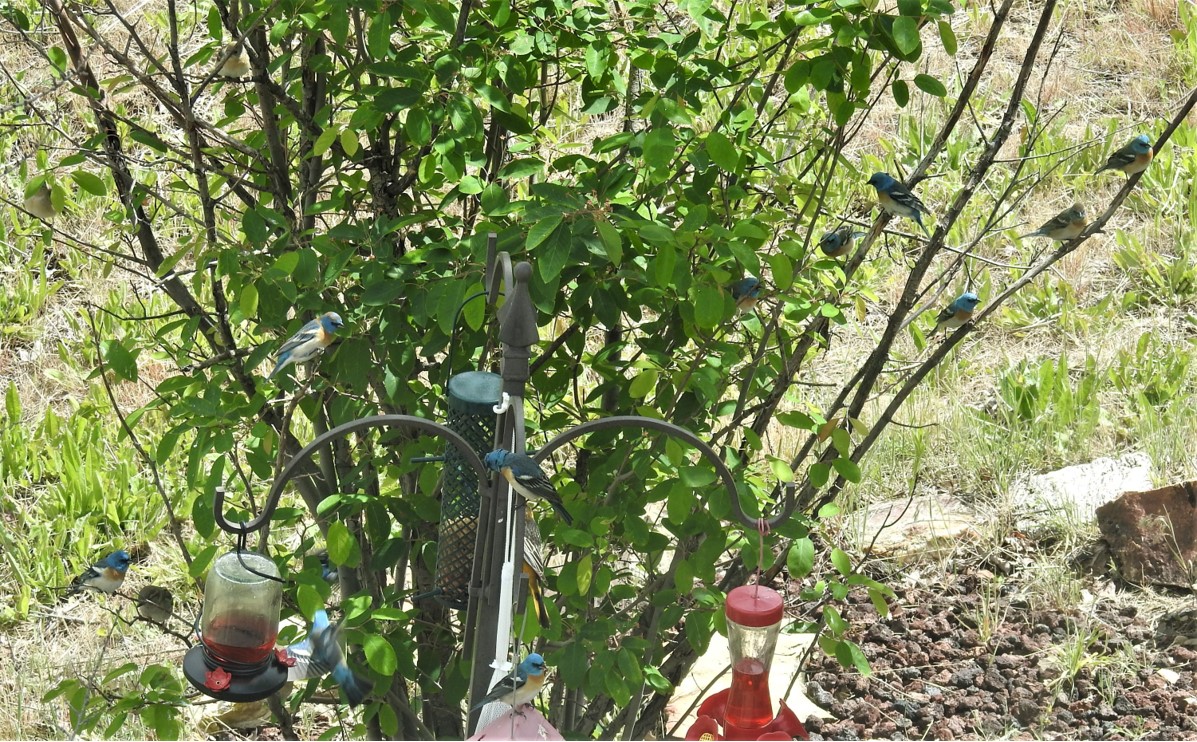
Folks, this was an interesting bit of reading….
LArnold
On Behalf Of Dan Smith
Subject: [texbirds] Migrating land birds in Tiger Shark diets
I ran across an interesting bit in one of the science newsletters I get daily. It seems that cross-Gulf migrant songbirds are a regular part of the diet of young tiger sharks, which are known to be very opportunistic foragers.. They had been assumed to eat seabirds such as resting gulls or petrels, but an examination of their stomach contents (pumped and released, not killed), revealed that young sharks show up in large numbers in the Gulf during the twice-yearly migration and dine on birds that have simply tired or been forced down by storms.
[ https://cosmosmagazine.com/biology/tiger-sharks-eat-songbirds | https://cosmosmagazine.com/biology/tiger-sharks-eat-songbirds ]
From the article:
” Of the 105 sharks examined, 41 (39%) contained bird remains. The DNA analysis facilitated conclusive identification of 11 species. And what that revealed was weird.
“They included types found in many American backyard, including songbirds such as the house wren ( Troglodytes aedon ) and eastern kingbird ( Tyrannus turannus ), and even a species of woodpecker, the yellow-belled sapsucker ( Sphyrapicus varius ).
“Most of the birds were eaten by tiger sharks in the autumn, although some remains showed up in young sharks during spring. The team examined a large online database of bird sightings known as [ https://ebird.org/home | eBird ] to assess the movements of terrestrial songbirds at these times of year.
“The twice-yearly migration of songbirds across the Gulf of Mexico involves [ https://doi.org/10.1111/gcb.14540 | in excess of two billion ] birds each season. The team found that these migration periods coincide with a peak of young sharks in the Gulf.
“ “In every instance, the timing of the tiger shark eating the bird coincided with the peak sighting for that species of bird off our coast,” says Drymon.
“Feldheim adds: “The tiger sharks scavenge on songbirds that have trouble flying over the ocean. During migration, they’re already worn out, and then they get tired or fall into the ocean during a storm.”
“The findings suggest that exhausted songbirds are an easily accessible and seasonally predictable pulse of nutrients for the young sharks. The inclusion of terrestrial birds in their diet is an unusual trophic interaction between land and sea ecosystems, because unlike [ https://doi.org/10.1371/journal.pone.0061284 | seabirds and guano ] , the energy exchange is reversed from land to sea.”