[IBLE] Re: SSHA or COHA ??

um, well, I’m not sure why, but our Rufous Hummingbird just now tried to chase off a Mourning Dove, and a couple of Red-tailed Hawks are out there screaming, but neither of these tactics are working.
In fact, these hawks are useless, are just attracting Magpies…… =)tisk

—– Original Message —–

From: “LARRY ARNOLD”
To: “IBLE”
Sent: Tuesday, September 11, 2018 11:14:04 AM
Subject: SSHA or COHA ??

does anyone have a Sharpie or Coop for hire?
we just re-seeded our back lawn and could use the help of one of these beasties to guard the area from “invasive seed-eaters” !!!
must be willing to work l-o-n-g hours, eh? 😉

gracias amigos!

[IBLE] Northern Panhandle: 8-9 September 2018

I spent the weekend in Bonner and Boundary Counties beginning Saturday
morning at Sandpoint City Beach, which produced my Bonner-first PECTORAL
SANDPIPER and not much else except a few expected land bird migrants
flitting about. More expected migrant land birds were along Oden
Bay/Sunnyside Road including a Willow Flycatcher on the late end of their
passage window. Small numbers of Red-necked Grebes were beginning to
assemble, but there’s not yet much suggestion of the thousands of waterfowl
and dozens of grebes and loons that will pile into that area in coming
weeks. The Clark Fork Delta Driftwood Yard had a VIRGINIA RAIL, VESPER
SPARROW, and other migrant sparrows. In Bonners Ferry, a flock of 10
BLACK-NECKED STILT (my Boundary County first) were on the Kootenai River
just downstream from the US-95 bridge (below the brewery). At Boundary
Creek WMA, 123 GREATER WHITE-FRONTED GEESE were right on time (for that
location) and twice that many AMERICAN WHITE PELICANS was my highest-ever
count in the Idaho panhandle. An evening stop at Kootenai NWR was pretty
quiet but 3 Long-billed Dowitchers, 2 Greater Yellowlegs, and a Lesser
Yellowlegs brought my World Shorebird Day list to 7 species.

Sunday, I undertook my favorite hike in north Idaho, hiking to Harrison
Lake, then continuing off-trail along the Selkirk Crest to Upper Beehive
Lake, and finishing at the Beehive Lakes trailhead. Consistent with other
recent reports from our region, WHITE-WINGED CROSSBILLS seem to be making a
good showing in the Spruce-zone this season. I had several groups between
the Beehive trailhead and Harrison Lake, including a group of 9 on the road
separating Beehive and Harrison trailheads (1 mile walk to complete the
10-11 mile loop hike). 2 NORTHERN PYGMY-OWLS were vocal along the trail to
Harrison Lake, and the shore of Harrison was teaming with migrant American
Pipits, Yellow-rumped Warblers, and Savannah and White-crowned Sparrows.
American Pipits were abundant in the treeless granite rubble of the Seven
Sisters crest area along with one Horned Lark (no Longspurs). A lone Pine
Grosbeak flew over, but this species has been unusually hard for me to find
in suitable breeding habitat of north Idaho over the last 2 years (maybe
I’ve just been in the wrong places at the wrong times).

A final stop at Sandpoint City Beach on Sunday evening produced about 9
COMMON TERNS. Non-avian highlights from Sunday included a huge bull Elk
nearby (location withheld), lots of American Pikas, and a confiding
Short-tailed Weasel in a boulder field over the ridge north of Upper
Beehive Lake.

Good Birding,

Carl Lundblad
Moscow, ID

[IBLE] Fwd: [CALBIRDS] Farallon highlights

Beyond Idaho…… 😉

Birders, if you aren’t busy chasing state birds, county birds, year birds, life birds, patch birds, flying birds, swimming birds, surfing birds, walking birds, talking birds, humming birds, birdie birds, or busy with yard work, why not just for fun check out the list of birds posted below by Jim, and/or his eBird entry with photos of Connecticut vs. Mourning Warbler, eyiyi!!

Also for fun….. https://en.wikipedia.org/wiki/Farallon_Islands

Autumnal equinox approaching already!
Larry

* * * * * * *

Connecticut Warbler (Oporornis agilis) (1) CONFIRMED

– Reported Sep 05, 2018 06:25 by Jim Tietz

– Southeast Farallon Island – restricted access, San Francisco, California

– Map: http://maps.google.com/?ie=UTF8&t=p&z=13&q=37.69852,-123.002789&ll=37.69852,-123.002789

– Checklist: https://ebird.org/view/checklist/S48321597

– Media: 8 Photos

– Comments: “Photos; doc to CBRC”

From: CALBIRDS@yahoogroups.com [mailto:CALBIRDS@yahoogroups.com] On Behalf Of Jim Tietz jimtietz@yahoo.com [CALBIRDS]
Sent: Thursday, September 06, 2018 8:09 PM
To: calbirds@yahoogroups.com
Subject: [CALBIRDS] Farallon highlights

Hi birders,

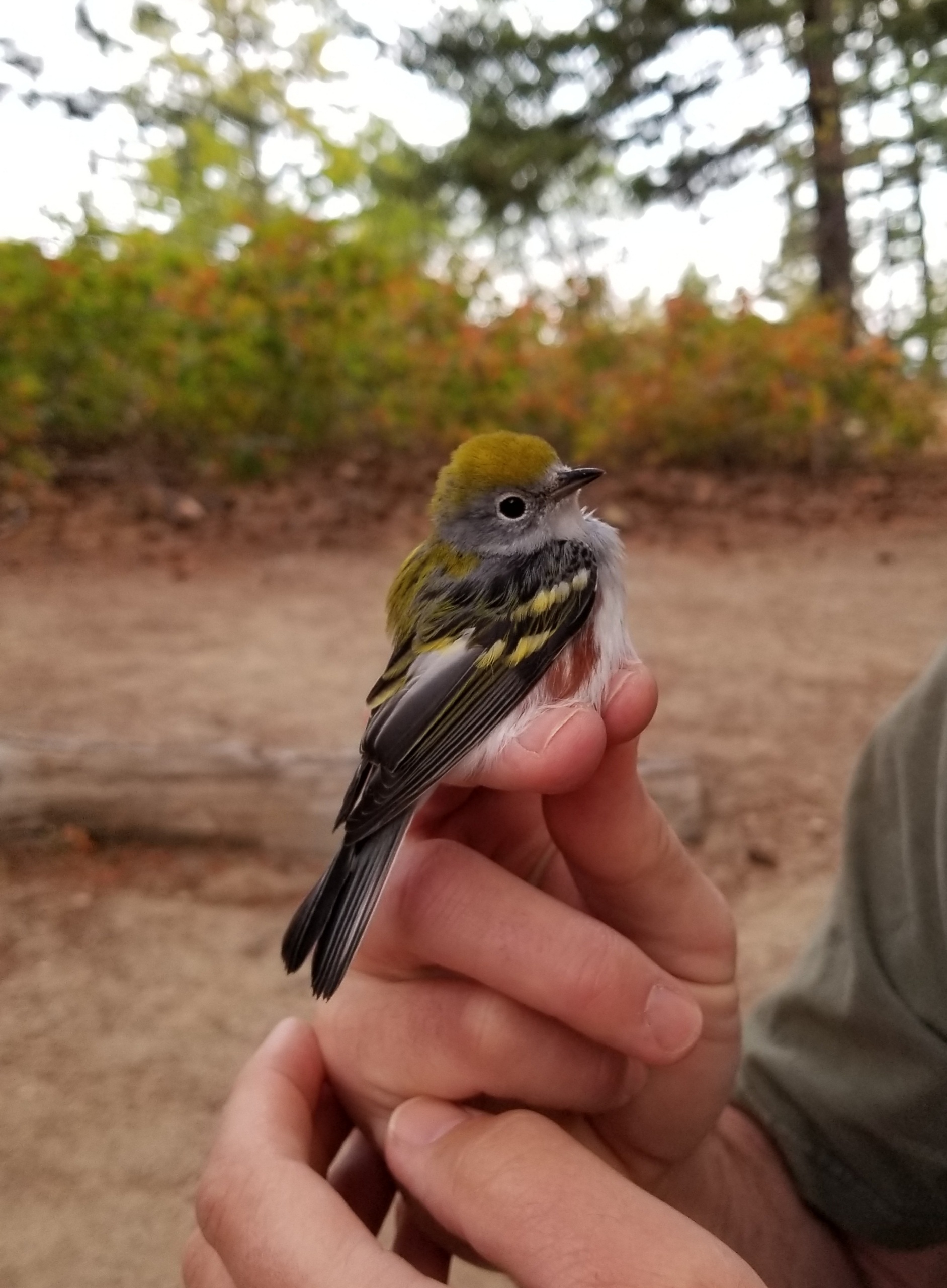
Over the last few days, the Point Blue crew experienced ideal weather ( overcast skies, limited visibility, and light winds) for sending migrants to Southeast Farallon Island. And oh my, how they came. In addition to the normal western birds, we found the following: Red-footed Booby-1 (1st record since 1975), Scripps’s Murrelet-1, Least Flycatcher-2, Eastern Warbling Vireo-1, Red-eyed Vireo-1, Green-tailed Towhee-1, Bobolink-2, Ovenbird-1, Tennessee Warbler-4, Connecticut Warbler-1, Mourning Warbler-1, American Redstart-3, Magnolia Warbler-1, Blackburnian Warbler-1, Chestnut-sided Warbler-2, Blackpoll Warbler-1, and Canada Warbler-1 (our 4th this fall).

Southeast Farallon Island, a part of the Farallon National Wildlife Refuge, is off limits to the public, but the juvenile Red-footed Booby, which was seen yesterday and today, may be visible on a whale watching boat to the island. Although there have been 3 Brown Boobies on Sugarloaf Islet lately, we have yet to see the Red-footed Booby land there. Yesterday afternoon it landed briefly on Saddle Rock before the Western Gulls chased it off. It then flew around the island with the pelicans for a couple hours before sunset. Today we saw it briefly around 2:15 PM. The booby could be roosting somewhere else on the island that we are unaware of.

To see full checklists of the birds we’re seeing with photos, check out our profile in eBird: https://ebird.org/profile/MTYwOTAz

John Garrett, Sarah Hecocks, Kurt Ongman, Amanda Spears, James R Tietz
Southeast Farallon Island, CA

Posted by: Jim Tietz