This adult male (non-breeding plumage) Chestnut-sided Warbler was captured, banded, & released earlier this morning at IBO’s Lucky Peak field station (Ada Co).
Sent from my iPhone
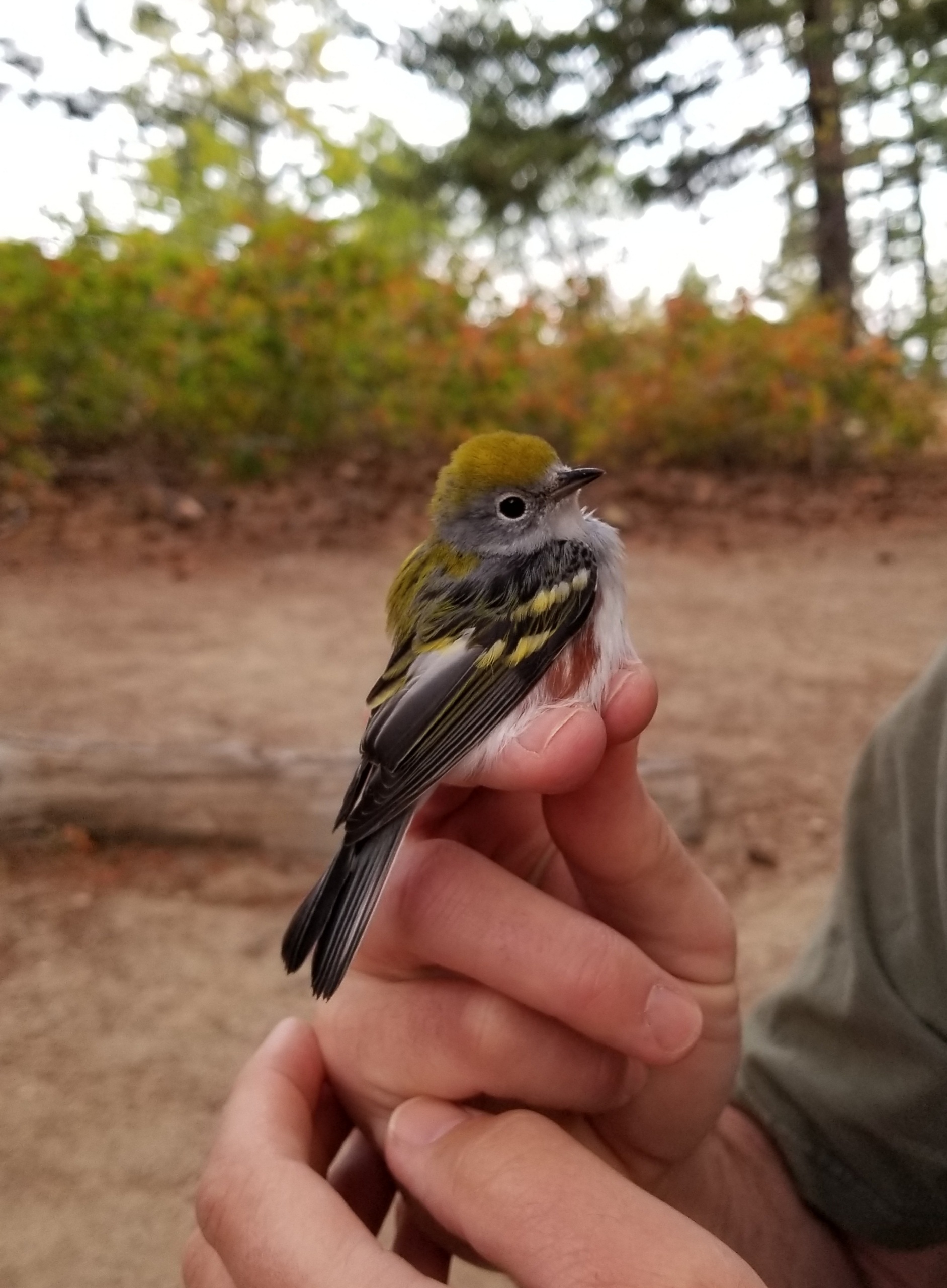

This adult male (non-breeding plumage) Chestnut-sided Warbler was captured, banded, & released earlier this morning at IBO’s Lucky Peak field station (Ada Co).
Sent from my iPhone
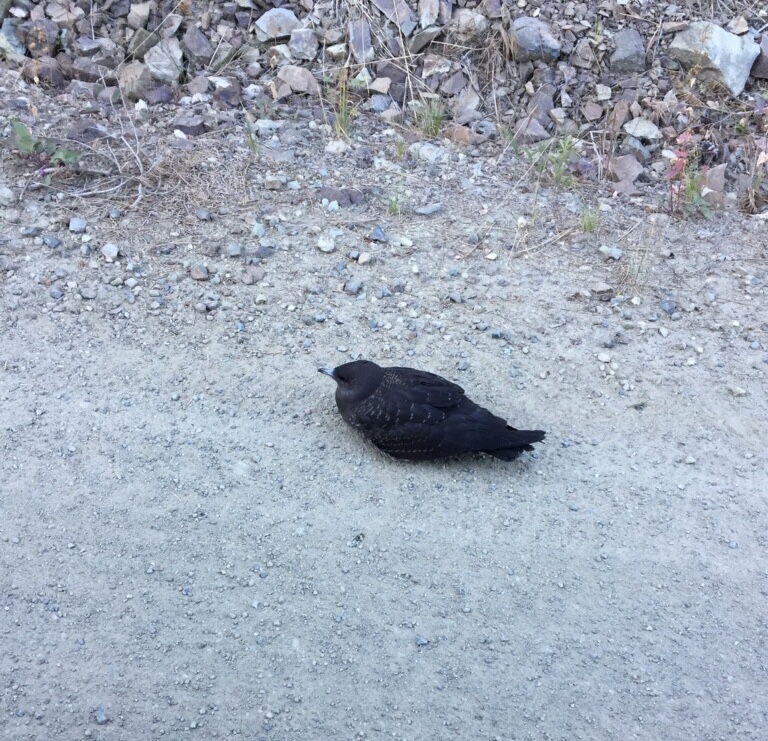
This juvenile jaeger was seen near Hells’s Canyon last weekend. I don’t know the exact location as this photo was taken by a hunter and he isn’t revealing his hunting area.
I just saw a posting for a juvenile Long-tailed Jaeger in Utah. Keep your eyes open folks. It’s jaeger time!
Denise Hughes
Caldwell, Idaho
How about an Idaho Hummer day??
Mid August or tied into Rudene’s hummer fest at Memorial Day???
Bill Moore
Hoot Owl
Inkom
> On Sep 4, 2018, at 3:26 PM, LARRY ARNOLD larnold47@cableone.net [ible]
>
>
> Zeeeee-chuppity chup! This would be our Rufousoidal Hums speaking to all y’all on IBLE…… 😉
>
> Forwarding this a few days late, but still of interest to some of us, yes?
>
> Folks mentioned herein are HumBuds of mine, long ago and far away.
>
> Larry, Boise
>
>
> —–Original Message—–
> From: BB for Hummingbirds and Gardening for them in the Southeast [mailto:HUMNET-L@LISTSERV.LSU.EDU
> Sent: Thursday, August 30, 2018 12:12 PM
> To: HUMNET-L@LISTSERV.LSU.EDU
> Subject: [HUMNET-L] International Hummingbird Day
>
>
> In 1996, I casually mentioned to the late Olga Clifton that 15 August was
>
> going to be International Hummingbird Day and we are going to celebrate
>
> here at your place in Abita Springs LA. And Olga in her own inimitable way
>
> said, “Great, I’ll get out a press release!”
>
>
> Olga was a great promoter. That first year, with a couple of week’s
>
> notice, the Clifton yard hosted 92 eager hummingbird watchers. Numbers of
>
> hummingbird lovers nearly tripled the next August and very soon, the ad hoc
>
> festival outgrew Walter & Olga’s splendid property. The festival then moved
>
> to Mizell’s nursery in Folsom LA, where it was a huge success.
>
>
> At some point, the event shifted to September and my own attentions shifted
>
> elsewhere. Linda Beall very ably held down the fort at that very busy
>
> event.
>
>
> I have lost the time line, but recently, Ross Hawkins asked me about
>
> International Hummingbird Day and even amidst so many early fall
>
> activities, I want to say: 1 September is International Hummingbird Day.
>
>
> Celebrate these unique birds by putting out a feeder, or another feeder.
>
> Keep ’em clean and filled through the southward migration and beyond. Make
>
> a list of nectar-producing plants to get started.
>
>
> At my place, a major push of southbound Ruby-throateds began yesterday and
>
> I’ve gotten calls from other humfolks commenting on increasing numbers.
>
> Feel free to pass this along to any other venues where it might be
>
> appropriate. WOOHOO! Enjoy!
>
>
> NLN
>
>
>
> ~~~~~~~~~~~~~~~~~~~~
>
> Nancy L Newfield
>
> Casa Colibrí
>
> Metairie, Louisiana USA
>
> nancy@casacolibri.net
> ~~~~~~~~~~~~~~~~~~~~
>
>
>
>
>
>
Like Joel says, “Phew!!”
But hey, maybe a few techies / birders / on IBLE will munch their way thru this like I’m doing!? =)
Otherwise, it’s just for fun……
Larry, Boise
—–Original Message—–
From: National Birding Hotline Cooperative (Chat Line) [mailto:BIRDCHAT@LISTSERV.KSU.EDU] On Behalf Of Weintraub, Joel
Sent: Tuesday, September 04, 2018 8:02 AM
To: BIRDCHAT@LISTSERV.KSU.EDU
Subject: [BIRDCHAT] Ocular-Binocular Manual Revision 22 years later
BirdChatters
Over two decades ago, seeing there was a lack of a binocular lab for field biology students comparable to what biology students get for microscopes, I put together a workshop to fill that void. I posted my initial attempt in Aug 1996 to BirdChat and revised the document the next month.
I think it’s time for a revision!!!
I hope this is of value to students, teachers, nature guide leaders, docent trainers, birders, and anyone interested in binoculars.
Feel free to share this and use it!!
The 32 page manual can be found on my Dropbox account at https://www.dropbox.com/s/839lpkpg28zebt6/Ocular%20Binoc%20Manual%20Revision.docx?d1=0 or http://tinyurl.com/ycznbcvw
Dropbox may show you a message trying to get you to join after a few seconds, if so, scroll down and just click on “No thanks, continue to view”, then hopefully you will see on the upper right in blue a “Sign in” and next to it “Download”, … open the Download and click on “Direct download” to get a copy, and then you either can open with Word or Save File and go from there. Phew!!
Thanks
Joel
Joel Weintraub
Dana Point, CA
Zeeeee-chuppity chup! This would be our Rufousoidal Hums speaking to all y’all on IBLE…… 😉
Forwarding this a few days late, but still of interest to some of us, yes?
Folks mentioned herein are HumBuds of mine, long ago and far away.
Larry, Boise
—–Original Message—–
From: BB for Hummingbirds and Gardening for them in the Southeast [mailto:HUMNET-L@LISTSERV.LSU.EDU] On Behalf Of Nancy L Newfield
Sent: Thursday, August 30, 2018 12:12 PM
To: HUMNET-L@LISTSERV.LSU.EDU
Subject: [HUMNET-L] International Hummingbird Day
In 1996, I casually mentioned to the late Olga Clifton that 15 August was
going to be International Hummingbird Day and we are going to celebrate
here at your place in Abita Springs LA. And Olga in her own inimitable way
said, “Great, I’ll get out a press release!”
Olga was a great promoter. That first year, with a couple of week’s
notice, the Clifton yard hosted 92 eager hummingbird watchers. Numbers of
hummingbird lovers nearly tripled the next August and very soon, the ad hoc
festival outgrew Walter & Olga’s splendid property. The festival then moved
to Mizell’s nursery in Folsom LA, where it was a huge success.
At some point, the event shifted to September and my own attentions shifted
elsewhere. Linda Beall very ably held down the fort at that very busy
event.
I have lost the time line, but recently, Ross Hawkins asked me about
International Hummingbird Day and even amidst so many early fall
activities, I want to say: 1 September is International Hummingbird Day.
Celebrate these unique birds by putting out a feeder, or another feeder.
Keep ’em clean and filled through the southward migration and beyond. Make
a list of nectar-producing plants to get started.
At my place, a major push of southbound Ruby-throateds began yesterday and
I’ve gotten calls from other humfolks commenting on increasing numbers.
Feel free to pass this along to any other venues where it might be
appropriate. WOOHOO! Enjoy!
NLN
~~~~~~~~~~~~~~~~~~~~
Nancy L Newfield
Casa Colibrí
Metairie, Louisiana USA
nancy@casacolibri.net
~~~~~~~~~~~~~~~~~~~~
in case anyone has interest in current CV California birds…….
recently across S Idaho at locations we checked, Barn Swallows were swarming, easily outnumbering other swallow sp
for the fun of birding, =)
Larry
From: central_valley_birds@yahoogroups.com [mailto:central_valley_birds@yahoogroups.com] On Behalf Of Manfred Kusch makusch@ucdavis.edu [central_valley_birds]
Sent: Saturday, September 01, 2018 6:31 PM
To: Steve Hampton; Steve Hampton stevechampton@gmail.com [central_valley_birds]
Cc: cvbirds
Subject: Re: [CVBirds] Putah Cr Summer Tanager, Lewis’s Woodpecker, warblers
Interesting report, and it builds on similar reports from that location in the past couple of weeks. It is interesting to me because after a short pulse of multiple warblers (Wilson”s, Orange-crowned, Black-throated Gray, Yellow, Nashville, and Common Yellowthroat) plus low numbers of Western Tanagers, I have encountered hardly any warblers along my stretch of the creek, only about 2.5 miles upstream from the location Steve and others have been reporting about. Today, not a single bird came to the traditional bathing spot upstream from my place between 9 and 10:30 when in past years this would be among the busiest times of the fall migration with often over 50 warblers coming to bathe within an hour or an hour and a half. The riparian habitat looks about as good as one could wish for, oaks, cottonwoods, willows, black walnuts, modesto ash, etc.. It feels rather strange not to see warblers moving through this prime habitat.
On a different note, a pair of Barn Swallows on my back porch is attempting a third brood. A total of 9 chicks fledged from the first two broods, but apparently that was not enough for these birds. The young of this third brood hatched only a few days ago and so will not fledge until early in the second half of September when most Barn Swallows will have left for their wintering grounds. If I remember correctly, a pair, probably the same one, raised a late third brood in the same place. I usually remove the mud nests after the breeding season, and this pair rebuilt the nest in exactly the same spot.
On Sep 1, 2018, at 3:52 PM, Steve Hampton stevechampton@gmail.com [central_valley_birds] < central_valley_birds-noreply@yahoogroups.com > wrote:
I saw nine warbler species this morning at Putah Creek, UC Davis (Wilson’s, Yellow, Orange-cr, Black-thr Gray, Hermit, Townsend’s, Nashville, MacGillivray’s, and Common Yellowthroat). I think that’s a first for me. That said, I’ve had five of these in the last few hours at the fountain in my backyard!
I also found the continuing Summer Tanager (not very cooperative — it sang, called, and made a very brief appearance at 11am near the water pipe outflow by Hopkins) and had a flyover Lewis’s Woodpecker (typical Sept behavior for this species– flying high down the creek).
Full list and a few more pics at https://ebird.org/view/checklist/S48218058
good birding,
—
Steve Hampton
Davis, CA
Manfred Kusch
South bank of Putah Creek
3 miles W of Davis
hitting Ted Trueblood, Jack’s Creek, Bruneau Duck Ponds, AFR dam to Willow Bay last Thursday……
the only bird we had to verify in eBird across S Idaho was GT Grackle, but this has been a break-out year for them !!??
1000s of gulls and terns at AFR dam to Willow Bay, whoa Nellie!!
Yes, GT Grackles have been spreading across southern Oregon too! They used to only be at Summer Lake, but now they have shown up in several more locations, and spread out a bit too. Really neat!
Canada Goose
Wood Duck
Northern Shoveler
Gadwall
Mallard
Northern Pintail
Green-winged Teal
Ruddy Duck
California Quail
Ring-necked Pheasant
Pied-billed Grebe
Western Grebe
Clark’s Grebe
Rock Pigeon
Eurasian Collared-Dove
Mourning Dove
Virginia Rail
Sora
American Coot
Black-necked Stilt
American Avocet
Killdeer
Marbled Godwit
Least Sandpiper
peep sp.
Long-billed Dowitcher
Wilson’s Snipe
Spotted Sandpiper
Greater Yellowlegs
Lesser Yellowlegs
Bonaparte’s Gull
Franklin’s Gull
Ring-billed Gull
California Gull
Larus sp.
gull sp.
Caspian Tern
Common Tern
Forster’s Tern
Double-crested Cormorant
American White Pelican
Great Blue Heron
Great Egret 21 at Seagull Bay
Snowy Egret
Black-crowned Night-Heron
White-faced Ibis
Turkey Vulture
Osprey
Golden Eagle
Northern Harrier
Bald Eagle
Swainson’s Hawk
Red-tailed Hawk
Belted Kingfisher
American Kestrel
Western Kingbird
Black-billed Magpie
American Crow
Common Raven
Barn Swallow
swallow sp.
Marsh Wren
European Starling
American Goldfinch
Song Sparrow
Yellow-headed Blackbird
Western Meadowlark
Red-winged Blackbird
Great-tailed Grackle 10 near Grand View
Yellow Warbler
—
Beautiful male in the cottonwoods along the dogleg just now,
Kit
Kit Struthers
kit619@centurylink.net
Idaho Falls ID
Sent from my iPhone
Spent a few days at the cabin &, last evening while taking a walk, an owl flew across my path & landed in a Douglas Fir. From 15 ft away, I got great binoc views of a Boreal Owl. The owl was on the hunt & took off a few minutes later. Earlier in the day, I found a female Western Tanager. And for Ruth Shea, the Trumpeter Swan pr at Swan Lake, Island Park were successful again this year, at least 2 & maybe more juveniles with them.
Now, back at home &, it appears, that both my Black-headed Grosbeaks & Calliope Hummingbirds have moved on. Not for lack of seeds or nectar, as both still had food. I’ll keep my nectar up a bit longer to see if I get any straggler migrants. Not much in the way if Warblers, yet.
Brian Carrigan
Blackfoot
Thinking about it, there are several species that cannot be positively identified by visual means only, like the Cassia Crossbill. Without that vocalization, I would not have been able to determine the bird I was seeing was actually a Cassia and not just some subspecies of Red Crossbill. Another bird that I identified vocally was the Whiskered Screech-Owl. I was able to make out there silhouettes, but it was the vocalization that positively identified the bird. I have never been a fan of using recordings to entice birds out of hiding, so vocalization may be the only way to I.D. certain birds. Secretive birds should not be disturbed just to get a visual I.D. So I feel comfortable counting the Mexican Whip-poor-will that I heard in Medera Canyon. Though I did not see it, it was probably less than 100 feet away up the canyon and clearly making its unmistakable call. Thanks for all the comments.
Good birding,Brad
On Saturday, September 1, 2018 9:45 PM, “‘Tom McCabe’ tmccabe9@cableone..net [ible]”
Brad:I agree with everything Mark said. I used to “pooh-pooh” the idea of counting birds by sound, but that was before I began to distinguish more and more birds by sound. If I hear a bird, and I KNOW what bird it is, why not count it? But I think each birder has to make his or her own choice. One way I use to distinguish is that I don’t go out to “watch” birds, I go out to “identify” them. So each day I try to “identify” at least 30 birds (my Recommended Daily Allowance), whether I “see” them or not.BTW, if you want to be totally fooled about the sound of a bird, you should hear Mark imitate a Pygmy Owl. My wife and I were being guided by him near San Blas, and he imitated the owl, and we had 2 different species of Pygmy Owl (Northern and Ferruginous if I remember correctly) come to see who was in their territory. Way cool.Tom McCabe, Boise From: ible@yahoogroups.com [mailto:ible@yahoogroups.com] On Behalf Of Mark Stackhouse westwings@sisna.com [ible]
Sent: Saturday, September 01, 2018 3:15 PM
To: Brad Hardenburger
Cc: Idaho Birders Linked Electronically
Subject: Re: [IBLE] Cassia Crossbill Hola Brad, Your question about what “counts” as a life bird is a good one. As a birding guide, I face that question with each new client, and the answers are all over the map. Some count only seen birds, some count only really, really well-seen birds, others count heard birds if they can be clearly identified, yet others only count heard birds from notoriously difficult to see groups, such as owls and rails. Some count anything they even thought they heard. I even overheard in a group of college students I was guiding (not really birders), “Did you see it well enough for me to put on my list?” In the end, it’s your list, and you make the rules. It’s whatever you feel best about doing – what makes your list seem most “honest” to YOU. The only reason for standardized rules is if you wish to compare your list to others. According the the biggest arbiter of such list-comparisons, the ABA, heard-only birds count if they were clearly identified by the observer. One of the rationales for accepting heard birds was to reduce disturbance by birders trying to get a look at shy, retiring species. I’ve had many clients who haven’t accepted that change, and only count seen birds. But, as you point out, if the sine qua non of listing is getting a positive identification before adding a species to a list, then some species should not be counted with a visual observation alone. Any species that can only be reliably identified by sound should not be added to a list with a visual observation alone. For my own part, I simply make a note if I only heard the species – it’s more valuable to keep all the data. For year lists, big days, etc., I count heard-only birds if the listing rules allow it. For my own life list, it’s all there, so that I know which I’ve seen, and which are only heard, so I can count it either way. But let me encourage you to become a more audio-centric birder. You’ll find more birds. You can only see in one direction, while sounds come from 360°. Good birding! Mark Mark Stackhousemark@westwings.comfrom Mexico:01-323-285-1243 (San Blas, Nayarit)001-801-518-5618 (cellular – U.S. and Mexico)from U.S.011-52-323-285-1243 or1-801-518-5618
On Sep 1, 2018, at 12:55 AM, Brad Hardenburger bradhardenburger@yahoo.com [ible]
#yiv4829993835 #yiv4829993835 — #yiv4829993835ygrp-mkp {border:1px solid #d8d8d8;font-family:Arial;margin:10px 0;padding:0 10px;}#yiv4829993835 #yiv4829993835ygrp-mkp hr {border:1px solid #d8d8d8;}#yiv4829993835 #yiv4829993835ygrp-mkp #yiv4829993835hd {color:#628c2a;font-size:85%;font-weight:700;line-height:122%;margin:10px 0;}#yiv4829993835 #yiv4829993835ygrp-mkp #yiv4829993835ads {margin-bottom:10px;}#yiv4829993835 #yiv4829993835ygrp-mkp .yiv4829993835ad {padding:0 0;}#yiv4829993835 #yiv4829993835ygrp-mkp .yiv4829993835ad p {margin:0;}#yiv4829993835 #yiv4829993835ygrp-mkp .yiv4829993835ad a {color:#0000ff;text-decoration:none;}#yiv4829993835 #yiv4829993835ygrp-sponsor #yiv4829993835ygrp-lc {font-family:Arial;}#yiv4829993835 #yiv4829993835ygrp-sponsor #yiv4829993835ygrp-lc #yiv4829993835hd {margin:10px 0px;font-weight:700;font-size:78%;line-height:122%;}#yiv4829993835 #yiv4829993835ygrp-sponsor #yiv4829993835ygrp-lc .yiv4829993835ad {margin-bottom:10px;padding:0 0;}#yiv4829993835 #yiv4829993835actions {font-family:Verdana;font-size:11px;padding:10px 0;}#yiv4829993835 #yiv4829993835activity {background-color:#e0ecee;float:left;font-family:Verdana;font-size:10px;padding:10px;}#yiv4829993835 #yiv4829993835activity span {font-weight:700;}#yiv4829993835 #yiv4829993835activity span:first-child {text-transform:uppercase;}#yiv4829993835 #yiv4829993835activity span a {color:#5085b6;text-decoration:none;}#yiv4829993835 #yiv4829993835activity span span {color:#ff7900;}#yiv4829993835 #yiv4829993835activity span .yiv4829993835underline {text-decoration:underline;}#yiv4829993835 .yiv4829993835attach {clear:both;display:table;font-family:Arial;font-size:12px;padding:10px 0;width:400px;}#yiv4829993835 .yiv4829993835attach div a {text-decoration:none;}#yiv4829993835 .yiv4829993835attach img {border:none;padding-right:5px;}#yiv4829993835 .yiv4829993835attach label {display:block;margin-bottom:5px;}#yiv4829993835 .yiv4829993835attach label a {text-decoration:none;}#yiv4829993835 blockquote {margin:0 0 0 4px;}#yiv4829993835 .yiv4829993835bold {font-family:Arial;font-size:13px;font-weight:700;}#yiv4829993835 .yiv4829993835bold a {text-decoration:none;}#yiv4829993835 dd.yiv4829993835last p a {font-family:Verdana;font-weight:700;}#yiv4829993835 dd.yiv4829993835last p span {margin-right:10px;font-family:Verdana;font-weight:700;}#yiv4829993835 dd.yiv4829993835last p span.yiv4829993835yshortcuts {margin-right:0;}#yiv4829993835 div.yiv4829993835attach-table div div a {text-decoration:none;}#yiv4829993835 div.yiv4829993835attach-table {width:400px;}#yiv4829993835 div.yiv4829993835file-title a, #yiv4829993835 div.yiv4829993835file-title a:active, #yiv4829993835 div.yiv4829993835file-title a:hover, #yiv4829993835 div.yiv4829993835file-title a:visited {text-decoration:none;}#yiv4829993835 div.yiv4829993835photo-title a, #yiv4829993835 div.yiv4829993835photo-title a:active, #yiv4829993835 div.yiv4829993835photo-title a:hover, #yiv4829993835 div.yiv4829993835photo-title a:visited {text-decoration:none;}#yiv4829993835 div#yiv4829993835ygrp-mlmsg #yiv4829993835ygrp-msg p a span.yiv4829993835yshortcuts {font-family:Verdana;font-size:10px;font-weight:normal;}#yiv4829993835 .yiv4829993835green {color:#628c2a;}#yiv4829993835 .yiv4829993835MsoNormal {margin:0 0 0 0;}#yiv4829993835 o {font-size:0;}#yiv4829993835 #yiv4829993835photos div {float:left;width:72px;}#yiv4829993835 #yiv4829993835photos div div {border:1px solid #666666;min-height:62px;overflow:hidden;width:62px;}#yiv4829993835 #yiv4829993835photos div label {color:#666666;font-size:10px;overflow:hidden;text-align:center;white-space:nowrap;width:64px;}#yiv4829993835 #yiv4829993835reco-category {font-size:77%;}#yiv4829993835 #yiv4829993835reco-desc {font-size:77%;}#yiv4829993835 .yiv4829993835replbq {margin:4px;}#yiv4829993835 #yiv4829993835ygrp-actbar div a:first-child {margin-right:2px;padding-right:5px;}#yiv4829993835 #yiv4829993835ygrp-mlmsg {font-size:13px;font-family:Arial, helvetica, clean, sans-serif;}#yiv4829993835 #yiv4829993835ygrp-mlmsg table {font-size:inherit;font:100%;}#yiv4829993835 #yiv4829993835ygrp-mlmsg select, #yiv4829993835 input, #yiv4829993835 textarea {font:99% Arial, Helvetica, clean, sans-serif;}#yiv4829993835 #yiv4829993835ygrp-mlmsg pre, #yiv4829993835 code {font:115% monospace;}#yiv4829993835 #yiv4829993835ygrp-mlmsg * {line-height:1.22em;}#yiv4829993835 #yiv4829993835ygrp-mlmsg #yiv4829993835logo {padding-bottom:10px;}#yiv4829993835 #yiv4829993835ygrp-msg p a {font-family:Verdana;}#yiv4829993835 #yiv4829993835ygrp-msg p#yiv4829993835attach-count span {color:#1E66AE;font-weight:700;}#yiv4829993835 #yiv4829993835ygrp-reco #yiv4829993835reco-head {color:#ff7900;font-weight:700;}#yiv4829993835 #yiv4829993835ygrp-reco {margin-bottom:20px;padding:0px;}#yiv4829993835 #yiv4829993835ygrp-sponsor #yiv4829993835ov li a {font-size:130%;text-decoration:none;}#yiv4829993835 #yiv4829993835ygrp-sponsor #yiv4829993835ov li {font-size:77%;list-style-type:square;padding:6px 0;}#yiv4829993835 #yiv4829993835ygrp-sponsor #yiv4829993835ov ul {margin:0;padding:0 0 0 8px;}#yiv4829993835 #yiv4829993835ygrp-text {font-family:Georgia;}#yiv4829993835 #yiv4829993835ygrp-text p {margin:0 0 1em 0;}#yiv4829993835 #yiv4829993835ygrp-text tt {font-size:120%;}#yiv4829993835 #yiv4829993835ygrp-vital ul li:last-child {border-right:none !important;}#yiv4829993835