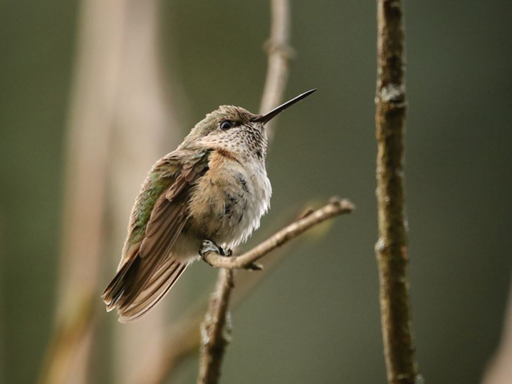
Promise not to laugh at my iPad photo, but at least you can tell what it is!
Sent from Yahoo Mail for iPad
Promise not to laugh at my iPad photo, but at least you can tell what it is!
Sent from Yahoo Mail for iPad
Around December of 2001, I made some of my first postings to IBLE with a visit to my yard feeder by a female Purple Finch. Charles Trost & others verified the sighting. This AM, while finishing stacking my last cord of firewood, I saw a different finch at the feeder. Another female Purple Finch. Haven’t had a yard sighting in years (first one was 12/16/01). The Blue Jay continues with irregular visits, too.
Brian Carrigan
Blackfoot
Earlier this evening, a Northern Shrike surprised me by flying onto the top of my crabapple tree right outside my office window.
Seems early for this bird, but it was cool to see it so close.
Guess it’s time to be on the lookout for them around.
Fyi…Jonathan Barnett, Horseshoe Bend
Sent from Mail
Greetings all! Psyched to read all the scoter sightings in the southern and
western part of the state, and wanted to make sure Salmon was represented.
Saw a female surf scoter 2wks ago on 8 Oct 18 at state gravel pit pond on
Hwy#93N, about 6-7mi N Salmon. Spotted in late afternoon, returned early
next AM for photo and she was gone. Frequent checks since have not revealed
any others.
Lucinda Haggas
Salmon
FYI
From: native-plants
Behalf Of Krupnick, Gary
Sent: Wednesday, October 24, 2018 5:46 AM
To: PCA
Subject: [PCA] New Smithsonian Study Links Declines in Suburban Backyard
Birds to Presence of Non-native Plants
New Smithsonian Study Links Declines in Suburban Backyard Birds to Presence
of Non-native Plants
Findings Give Landowners a Simple Roadmap To Provide Essential Habitat for
Breeding Birds
Insect-eating birds that depend on the availability of high-calorie,
high-protein cuisinenamely caterpillars and spidersduring the breeding
season to feed their young are finding the menu severely lacking in
backyards landscaped with even a small proportion of non-native plants,
according to a new study
Smithsonian Conservation Biology Institute. This reduction of food
availability has led to a decline in the breeding success and population
growth of the Carolina chickadee, the study found.
Landowners are using nonnative plants in their yards because theyre pretty
and exotic, theyre easy to maintain, and they tend to have fewer pests on
them, said Desirée Narango, a graduate student researcher at the
Smithsonian Conservation Biology Institute and first author of the study
published October 22 in PNAS. But it turns out that a lot of those insects
they see as pests are actually critical food resources for our breeding
birds. For landowners who want to make a difference, our study shows that a
simple change they make in their yards can be profoundly helpful for bird
conservation.
The study is the first to directly link the decline of a common resident
bird species to the lack of insect prey that results from the use of
nonnative plants in landscaping. Narango and colleagues placed nest boxes in
more than 160 yards in the Washington, D.C., metropolitan area and collected
data from homeowners monitoring the nest boxes weekly for Carolina chickadee
nests, eggs and nestlings. In those same yards, they also studied adult and
juvenile survival by gathering data from the homeowners on individually
marked birds they had resighted.
The researchers found that the only yards that were able to produce enough
chickadees to sustain a stable population were those with a plant
composition made up of more than 70 percent of native plants. Because more
than 90 percent of herbivorous insects will only eat one or a few native
plants, the use of these plants in landscaping is essential to ensure
breeding birds have enough insect prey to eat. For the same reason, native
plants are also likely critical for other resident birds, endangered species
and migratory speciesand not just in backyards on the East Coast.
These novel, artificial suburban landscapes are found across the country,
Narango said. But a gingko that you plant in D.C. and a gingko that you
plant in L.A. are doing the same thing for bird conservationnothing. By
using native plants, we can provide food for not only our common North
American species, but were also providing vital stopover habitat and
resources for migratory birds during their perilous journeys.
Because more than 80 percent of land in the contiguous United States is
privately managed, conservationists are trying to get a handle on the ways
these human-dominated landscapes threaten wildlifeand how they can be
managed in a way that can help. The studys authors will continue to guide
landowners in their landscaping decisions by next looking at whether some
native plant species are disproportionately important for supporting insect
prey to breeding birds.
This study was conducted in partnership with the University of Delaware and
funded by the National Science Foundation. It relied on data collected by
landowners participating in the Smithsonians Neighborhood Nestwatch
program that engages communities in monitoring the annual survival and
reproductive success of specific bird species.
Urbanization is one of the primary ways were losing natural habitat around
the world, and it remains essential that we figure out how we minimize our
impacts while maximizing the protection of biodiversity, said Pete Marra,
director of the Smithsonian Migratory Bird Center
By working together with citizen scientists participating in the
Neighborhood Nestwatch program, people actually living within the urban
matrix, we have collectively found a solution thats good for birds and also
for people.
Resources on native plants can be found online at Audubons Native Plants
Database
Federations Native Plant Finder
and the United States Department of Agricultures Plant Hardiness Zone Map
The Smithsonian Conservation Biology Institute
Smithsonians global efforts to save wildlife species from extinction and
train future generations of conservationists. SCBI spearheads research
programs at its headquarters in Front Royal, Virginia, the Smithsonians
National Zoo in Washington, D.C., and at field research stations and
training sites worldwide. SCBI scientists tackle some of todays most
complex conservation challenges by applying and sharing what they learn
about animal behavior and reproduction, ecology, genetics, migration and
conservation sustainability.
The papers third author is Douglas W. Tallamy with the University of
Delaware.
# # #
Howdy,
I drove around AFR on a rainy afternoon looking for shorebirds on the extensive mudflats. There were none on Danielson Creek Flats, nor on the huge area off Bower Road. But off of the corner of Yuma and Strang Rds. There were at least 240 long-billed Dowitchers feeding at what is now almost the upper edge of the rising reservoir.
Good Birding,
Chuck Trost
Always forward, never straight…
We are not supposed to be getting out of our vehicles at Dry Lake. The last time we talked with the caretaker he said we could bird the pond but to please stay in our vehicles.
Denise Hughes
Caldwell, Idaho
> On Oct 23, 2018, at 4:03 PM, Robert Kiernan photobirder@gmail.com [ible]
>
> S.of nampa today around one.sat my camp chair with scope while looking at ducks first 1then 2nd black crown Heron came out of Reed’s sat still and got good photos .while waiting 3 yellow legs came by nearby flock of 40+ dowitchers ducks of note n.pintail. n.shoveler green wing teal sitting pays off .
>
Since I did not get one from Jennifer Alban, but did get the ones from Jay and Jason (allegedly), I think it has more to do with the person’s contact list rather than IBLE. This is especially so when you look at the other people listed as receiving the email and not all of them are on IBLE. I think it’s a matter of someone clicking on the wrong link and the spammer sends out an email to everyone in their contacts. My $.02.
Tom
From: ible@yahoogroups.com [mailto:ible@yahoogroups.com] On Behalf Of bob perata bobperata@yahoo.com [ible]
Sent: Tuesday, October 23, 2018 10:00 AM
To: Denise Hughes
Cc: IBLE
Subject: Re: [IBLE] recent increase of spam on IBLE….
Thanks Denise.
BOB
On Tuesday, October 23, 2018, 9:29 AM, Denise Hughes
Cal birds is switching from yahoo groups to groups io. Not spam, just letting you know of the change.
Denise Hughes
Caldwell, Idaho
On Oct 23, 2018, at 9:02 AM, bob perata bobperata@yahoo.com
Just arrived back fro S California for 8-9 days and received several spam mail, I think, from Cal-Birds. Talked with an eBird moderator and think the spam might hav originated from eBird Orange Country, that I had communicated with. Got two this morning and one yesterday. I did not open them and threw them directly into spam and than erased spam. Nothing to do with IBLE..
BOB
On Tuesday, October 23, 2018, 8:54 AM, kathleen struthers kit619@centurylink.net
I haven’t received any.
Kit
Kit Struthers
Idaho Falls, ID
kit619@centurylink.net
On Oct 23, 2018, at 7:42 AM, Jane Westervelt jwestervelt@live.com
I haven’t seen any in my email, including my junk folder. I checked the website this morning and there’s no sign of junk emails coming through there in the last month either. It’s possible the IBLE address is being spoofed and the messages are only going to a few members that are showing as contacts in the affected users accounts. Interested in hearing if others are receiving these as well.
Jane
co-owner
_____
From: ible@yahoogroups.com
Sent: Tuesday, October 23, 2018 5:10 AM
To: LARRY ARNOLD; IBLE
Subject: Re: [IBLE] recent increase of spam on IBLE….
I’ve had the same thing, Larry. Gotten them recently from Jennifer Alban, Jay Carlisle, and Jason Talbot and several others. And I KNOW those people are not sending them! So far I’ve just been deleting them.
Cheryl
From: mailto:ible-noreply@yahoogroups.com
Sent: Monday, October 22, 2018 9:31 PM
To: IBLE
Subject: [IBLE] recent increase of spam on IBLE….
I’ve picked up at least six recently, and usually see ten or fewer recipients listed on each of the ones I’ve received.
Anyone else seeing this, and should we reply to the senders so they know their computers are doing this?
Or is this a broader problem, like something more to do with IBLE than with a few computers?
Thanks, Larry
S.of nampa today around one.sat my camp chair with scope while looking at
ducks first 1then 2nd black crown Heron came out of Reed’s sat still and
got good photos .while waiting 3 yellow legs came by nearby flock of 40+
dowitchers ducks of note n.pintail. n.shoveler green wing teal sitting pays
off .
I checked our spam filter and there were at least 4 associated with
‘Struthers’ and one subject was about increase in spam.